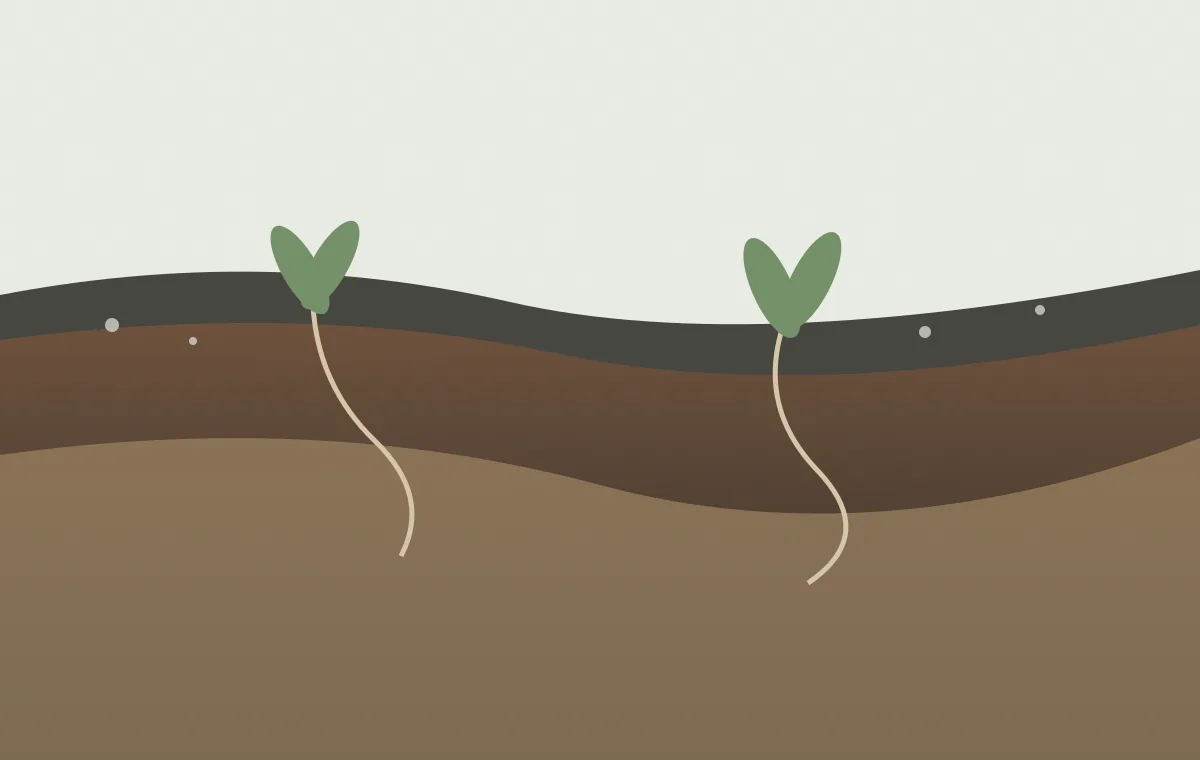
What Happens to Soil After a Wildfire?
Heat, ash, rainfall and pre-fire soil conditions interact. A field guide to reading the evidence without treating every burned slope alike.
Read article →Independent science communication · Field edition 01
Evidence-based stories and research explaining how soil, plants, wildlife and local communities respond to environmental change.
Not an emergency alert service. For current fire conditions, evacuation information or closures, use local official authorities.
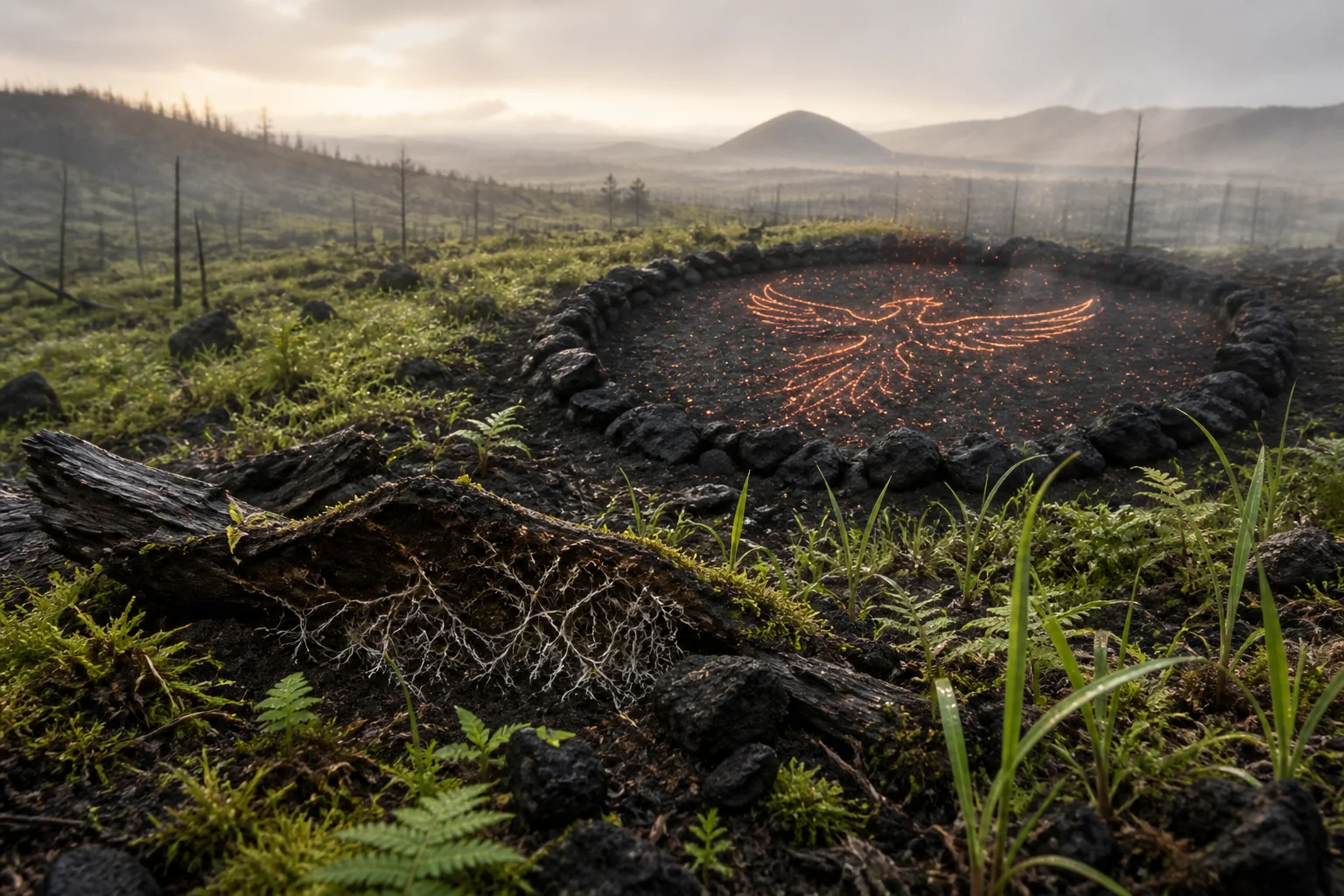
A recovery transect
These stages organize questions, not deadlines. Ecosystem type, disturbance intensity, climate and site history alter every path.
Fire, ash, heat, erosion risk and habitat loss vary across a landscape. Observation begins before a recovery claim.
Open stage notes ↗RecoverySeed banks, surviving roots, fungi, mobile wildlife and rainfall help shape early responses.
Open stage notes ↗RenewalNew ecological communities develop through local conditions—not a universal clock.
Open stage notes ↗Featured explanations
Every article names its sources, separates observation from interpretation and records a last-reviewed date.
Heat, ash, rainfall and pre-fire soil conditions interact. A field guide to reading the evidence without treating every burned slope alike.
Read article →
Surviving roots, stored seed, dispersal and nearby habitat can all contribute to regrowth—at rates set by the place, not a universal schedule.
Read article →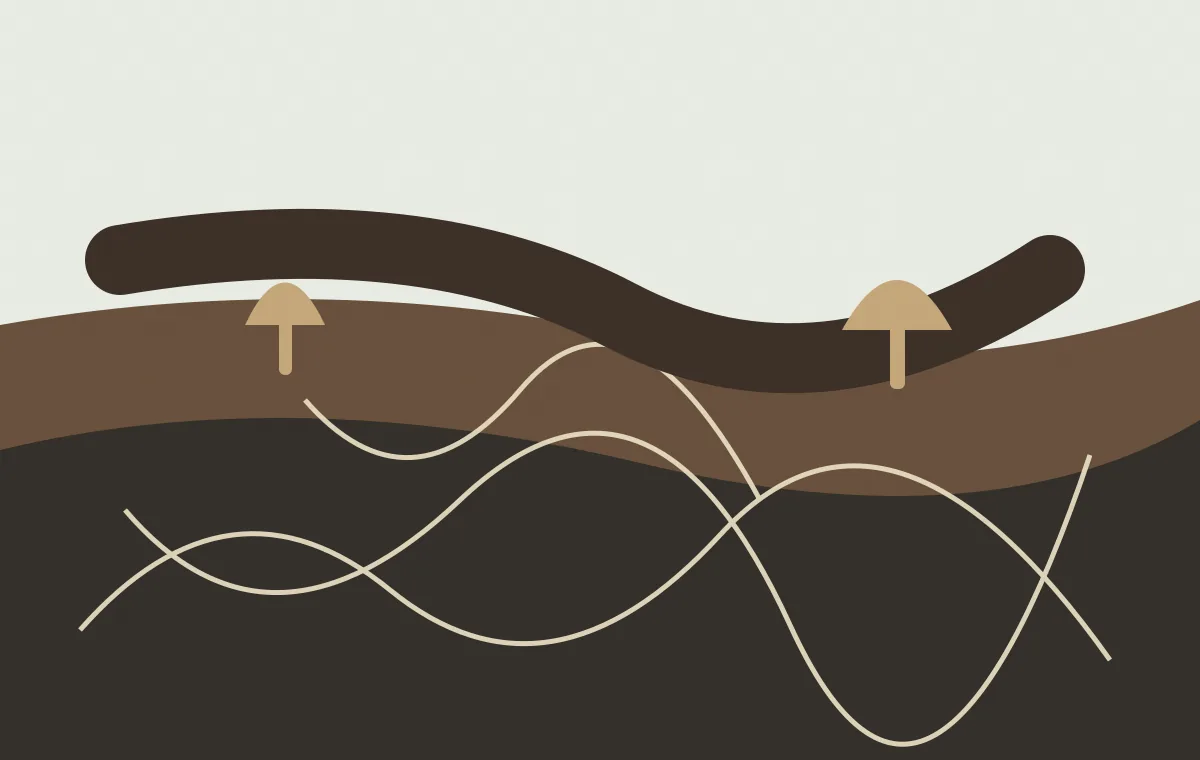
Fungal communities respond differently to heat, surviving hosts, moisture and substrate. Their recovery is a below-ground story that surface photos miss.
Read article →
Movement, shelter, food and life history shape responses. A burned landscape is not one habitat, and one sighting is not a population trend.
Read article →
Fire can be an ecological process and a serious hazard at the same time. Frequency, intensity and context determine the effects.
Read article →
Primary succession begins without an established soil, yet surviving pockets, nearby ecosystems and moisture can create many different pathways.
Read article →A general observation model
This sequence is a reporting framework—not a forecast for a particular site. Stages can overlap, repeat or take different directions.
Record severity patterns, remaining cover, soil exposure and changed access.
Look for surviving roots, seedling emergence, mobile organisms and microbial activity.
Measure cover and composition—not only the first green color visible from a distance.
Follow shelter, food, dead wood, stream conditions and connections among patches.
Compare repeated observations while accounting for climate and later disturbances.
Field stories
Repeat photography, field plots and landscape observation show that severity and surviving biological material varied across the park.

Ground research and satellite records reveal a landscape shaped by biological legacies, new substrates, topography and distance from surviving habitat.
Initial mapping documented unchanged, low-, moderate- and high-severity areas, giving managers a baseline for targeted assessment.
Research library
Curated links lead to public agencies, long-term monitoring programs and research repositories.
Fire regimes, severity, vegetation and landscape mosaics.
National Park Service: Ecological Consequences of Fire ↗National Park Service: Fire Ecology at Lassen Volcanic National Park ↗Erosion, nutrients, hydrology and post-fire monitoring.
USDA Forest Service Research: Long-term Soil Nutrient Responses after Wildfire ↗U.S. Geological Survey: Postfire Recovery Research ↗Resprouting, seed sources, site context and regeneration.
National Park Service: The 1988 Fires of Yellowstone ↗National Park Service: Fire Ecology at Lassen Volcanic National Park ↗Habitat change, stream communities and response at multiple scales.
National Park Service: Stream Community Response to the 2011 Las Conchas Fire ↗National Park Service: Ecological Consequences of Fire ↗Primary succession, biological legacies and remote observation.
U.S. Geological Survey: Ecology at Mount St. Helens National Volcanic Monument ↗NASA Earth Science: Forty Years of Forest Recovery at Mount St. Helens ↗U.S. Geological Survey: Lava Flow to Forest: Primary Succession ↗Monitoring, stabilization and evidence-led intervention.
U.S. Geological Survey: Monitoring Post-Fire Vegetation Rehabilitation Projects ↗USDA Forest Service: Science, Wildfire and Safety: Post-fire Management and Recovery ↗Restoration principles
Restoration begins with a defined problem and a baseline. General priorities include protecting exposed soil, favoring locally appropriate native species, managing invasive pressure, maintaining habitat connections and documenting change over time.
These principles are not a treatment plan. Local land agencies and qualified ecologists should evaluate hazards, natural regeneration and management goals before action.
Read the restoration framework →Describe the site and the question first.
Prioritize immediate risks using local guidance.
Use verified origin and ecological fit.
Watch pathways created by disturbance.
Keep refuge and movement in view.
Record outcomes, including unintended ones.
Research principles
The phoenix in our visual identity is an artistic metaphor for change. It is not an ecological model. Scientific claims are linked to identifiable sources; uncertainty and geographic limits stay visible.
FAQ
Short answers lead back to place-specific evidence and current official guidance.
No single answer applies to every forest. Some sites regenerate through surviving roots, seed or nearby habitat; others face altered climate, repeated disturbance, erosion, invasive species or loss of seed sources. Monitoring and local ecological expertise are needed before deciding whether intervention is appropriate.
There is no universal timetable. Soil processes, plant cover, species composition, habitat structure and watershed function can change on different schedules. Ecosystem type, severity, weather and site history all matter.
Fire is an ecological process in some fire-adapted systems, but it can also threaten people, water, cultural resources and habitats. Effects depend on the local fire regime, intensity, extent, season and current conditions.
Ecological succession describes changes in communities through time. Primary succession begins where developed soil and established communities are largely absent; secondary succession begins where biological or soil legacies remain. Real landscapes rarely follow one simple sequence.
That decision is site-specific. Professionals consider immediate erosion or safety risks, natural regeneration, invasive species, habitat connectivity, climate and management goals. Consult the responsible land agency or a qualified local ecologist.
Renewal Ecology is not an emergency alert service. Use your local emergency management office, fire authority, official park or land agency, and opt-in local alert systems for current evacuations, closures and safety instructions.
About the publication
Renewal Ecology is designed as an independent science-communication publication. We translate public research into readable explanations while preserving the difference between a general pattern and a local finding.
Until verified individual contributors and publisher details are supplied, articles use a clearly labeled institutional editorial profile and owner fields remain visible launch blockers.